Knowledge management for the AI era
Your KCS program was built for a world where humans consumed knowledge. AI has changed who — and what — is doing the consuming. Kintara Advisory helps organizations evolve what they've already built — not start over.
WHY THIS MATTERS
AI is only as trustworthy as the knowledge it draws from.

Organizations are deploying AI in support, sales, and operations — and discovering a problem they didn't anticipate: their knowledge isn't ready for an AI consumer.
AI doesn't read between the lines. It doesn't recognize that a role was renamed last month, or that a process changed after the last product release, or that a battlecard was written for a different product tier. It retrieves, synthesizes, and delivers — confidently — regardless of whether the content is current, contextually accurate, or appropriate for the situation.
The result: technically correct answers that are situationally wrong. User trust that erodes quietly, one interaction at a time.
This isn't an AI problem. It's a knowledge governance problem. And it requires a practitioner who understands both.
HOW I HELP
Practical frameworks. Real implementations. No theory for theory's sake.
AI-Informed Demand Implementation
Are your AI interactions feeding insights back into your knowledge base — or disappearing?
I help organizations build the signal layer that connects AI interaction feedback back into their KCS Evolve Loop — so that AI interactions become demand signals, not dead ends.
Best for: Organizations with active AI deployments experiencing content quality issues.
Knowledge-AI Readiness Assessment
Is your knowledge base ready to be consumed by AI?
I evaluate your current KCS program, knowledge governance practices, and AI implementation against a practical readiness framework — and tell you exactly where the gaps are and what to do about them.
Best for: Organizations preparing to deploy or expand AI in support operations.
Enterprise Knowledge Governance
As AI reaches across your organization, who's accountable for the quality of what it finds?
When AI expands beyond the support knowledge base — into Sales, Marketing, Product, and Engineering content — the governance problem scales. I help organizations design content trustworthiness frameworks that follow AI wherever it reaches.
Best for: Organizations deploying enterprise-wide AI tools across multiple domains
THE THINKING BEHIND THE WORK
Three concepts. One coherent framework.
The work I do is grounded in three interconnected ideas — developed through direct experience managing live AI implementations in enterprise support environments.
AI-Informed Demand
Traditional KCS relies on human encounters to trigger knowledge updates. AI-Informed Demand expands what counts as a demand signal — treating AI interaction feedback, escalation patterns, and terminology drift as first-class triggers in the Evolve Loop. The demand-driven model stays intact. The signals that feed it evolve.
Content Trustworthiness Framework
Not all knowledge is equally reliable for an AI consumer. The Content Trustworthiness Framework attaches a set of signals to every knowledge article — freshness, reuse recency, AI feedback trends, validation status — so users and AI systems know how much to trust a given response before acting on it.
The Evolved KDE Role
The Knowledge Domain Expert role was designed as the human quality layer in a KCS program. In an AI-augmented environment, that role becomes something more: AI's accountability partner. The person who knows what AI doesn't — organizational context, product nuance, the difference between technically correct and situationally right.
A white paper developing these concepts in full is available — read it here
WHO AM I
A practitioner.
Not a theorist.

I'm Imee-Lynn Corliss — founder of Kintara Advisory.
I've spent more than two decades in support operations and knowledge management — from support agent to global KCS Program Manager at CA Technologies, to standing up KCS at the state level at the NC Department of Information Technology, to now leading AI program management at Medallia where a company-wide AI program is showing me exactly where KCS and AI create friction.
I hold KCS v6 Practices Certification (highest level, Consortium for Service Innovation) and a Six Sigma Black Belt. The frameworks I bring to Kintara Advisory weren't developed in a workshop. They were developed by running into the problems — and figuring out how to solve them in production.
KCS v6 Practices Certified
Nearly 25 years in support operations and knowledge management
Six Sigma Black Belt
Active AI Copilot implementation practitioner
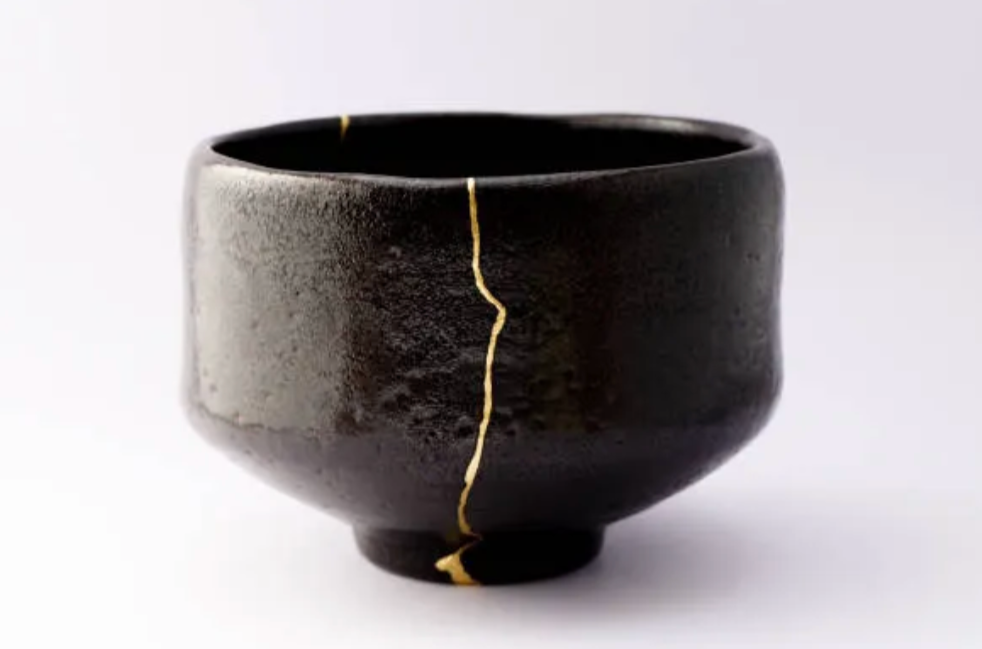
Kintara is inspired by kintsugi — the Japanese art of repairing broken pottery with gold, making it more resilient than before. Organizations have invested years building KCS programs. AI doesn't require starting over. It requires knowing where the cracks are — and strengthening them.